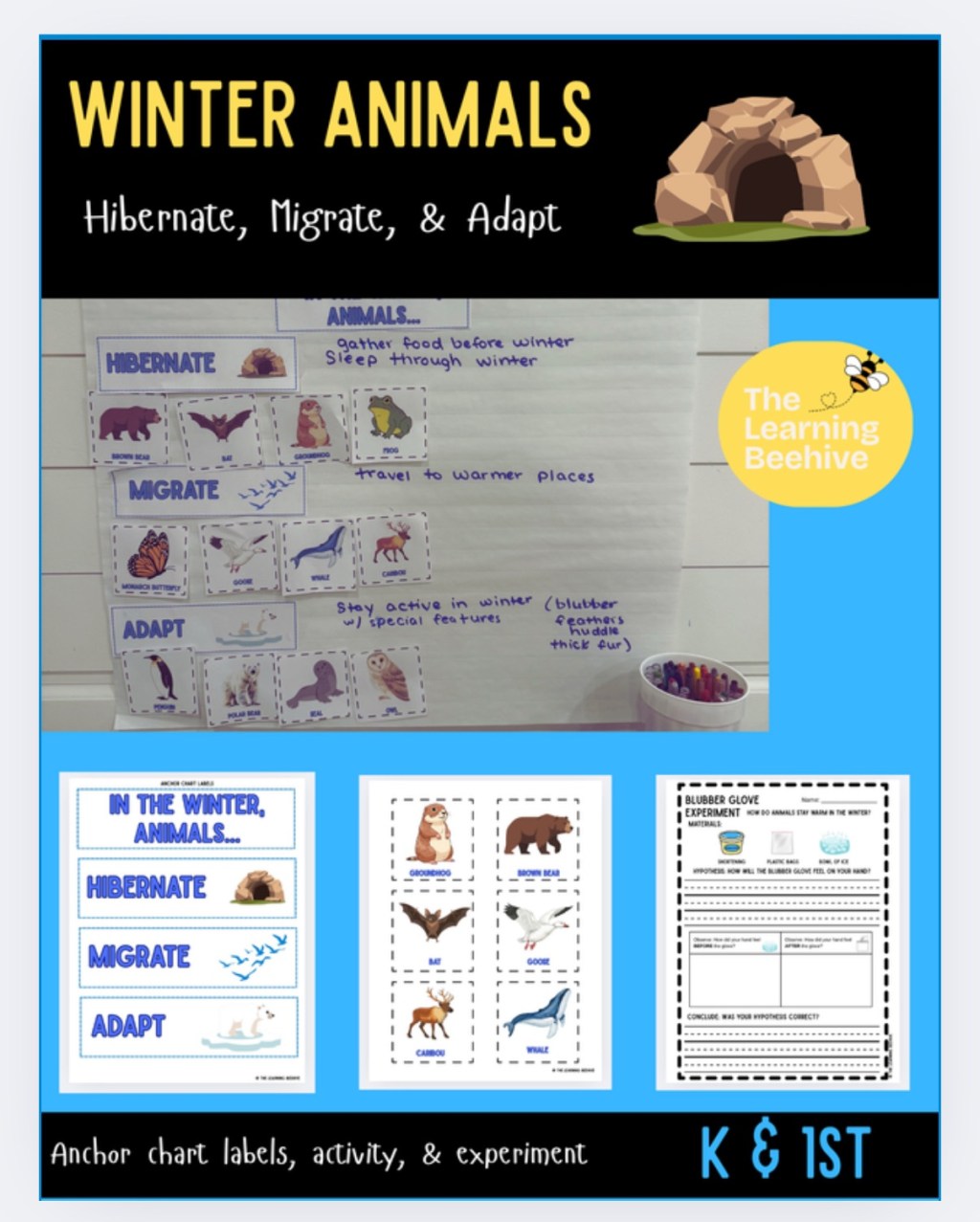
Winter is the perfect time to explore how animals survive cold weather. In this lesson, students learn that animals don’t all handle winter the same way—some sleep, some travel, and some have special features that help them stay warm. This sequence works beautifully for kindergarten and first grade and blends reading, discussion, hands-on science, and sorting.
📚 Start With a Read-Aloud
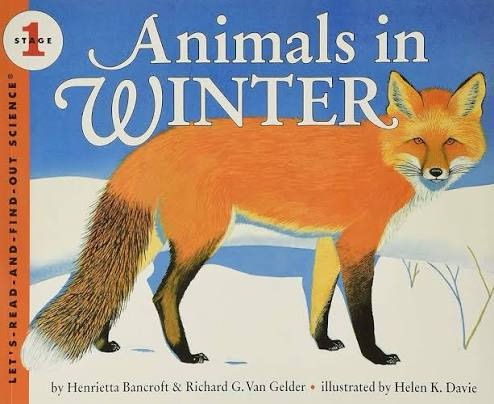
We begin with the book Animals in Winter.
This nonfiction read-aloud introduces students to:
Animals that hibernate Animals that migrate Animals that adapt to winter conditions
As you read, pause to ask:
What is happening to this animal in winter? Is it sleeping, traveling, or staying active?
This book sets a strong foundation before moving into charts and hands-on learning.
📊 Build an Anchor Chart Together
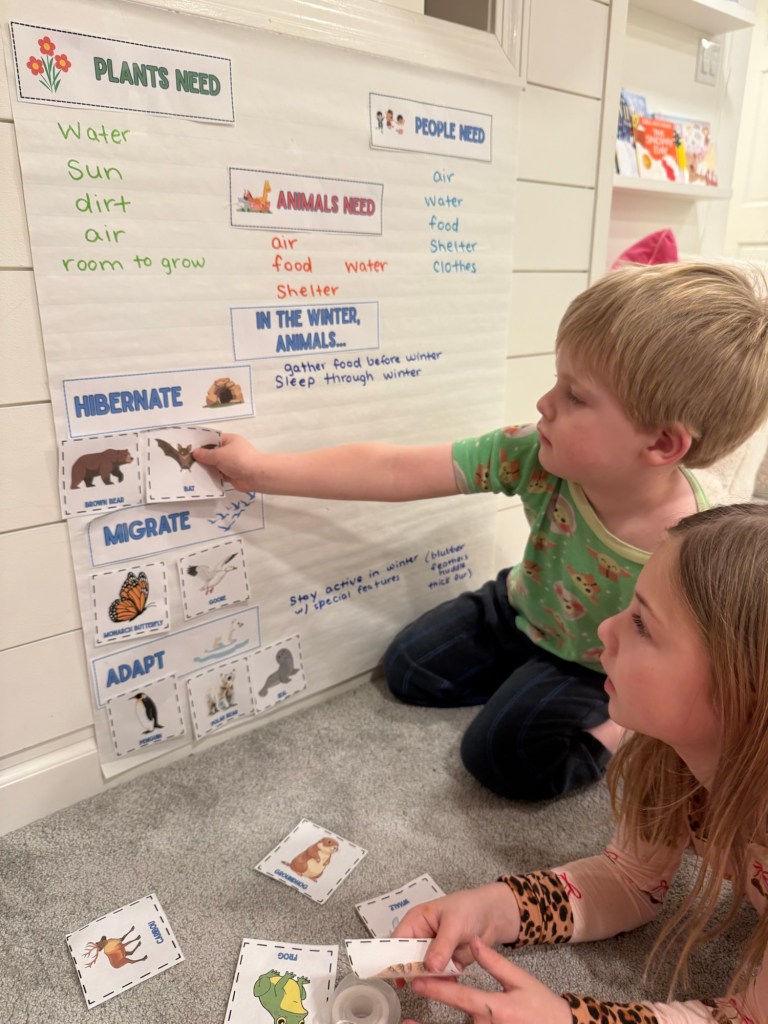
After reading, we create an anchor chart to organize our thinking.
We start with:
People Need Animals Need Plants Need
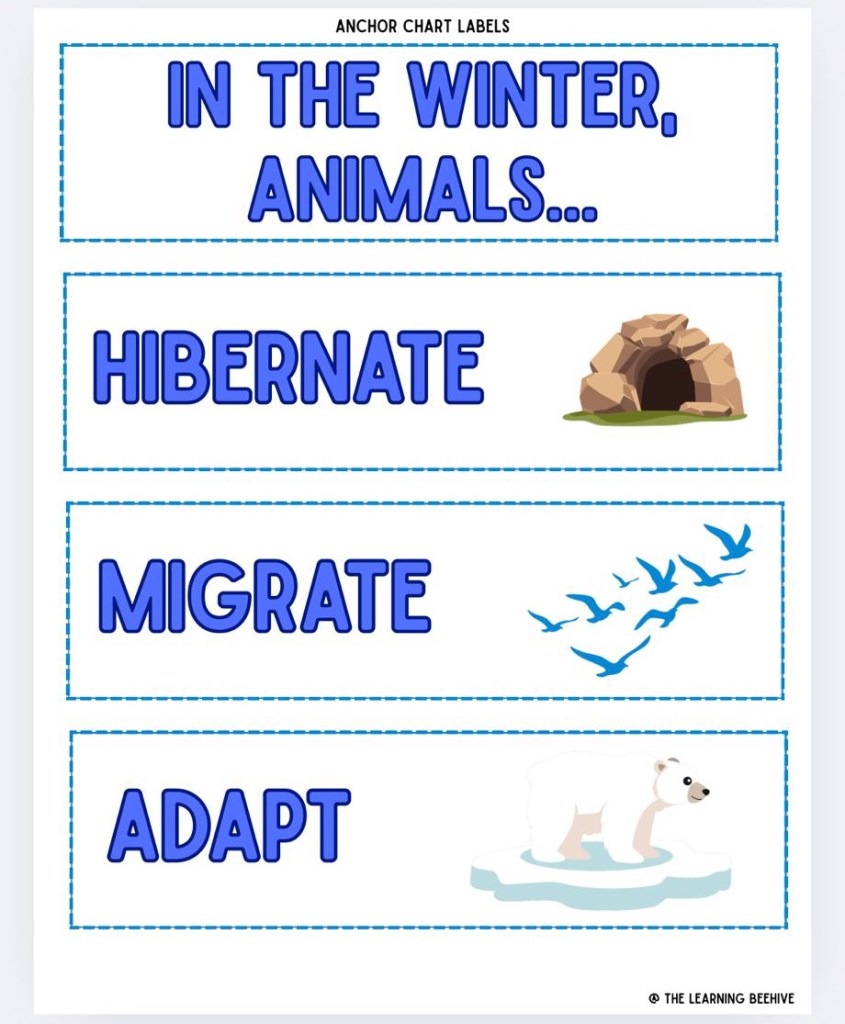
Then we shift focus to winter survival with:
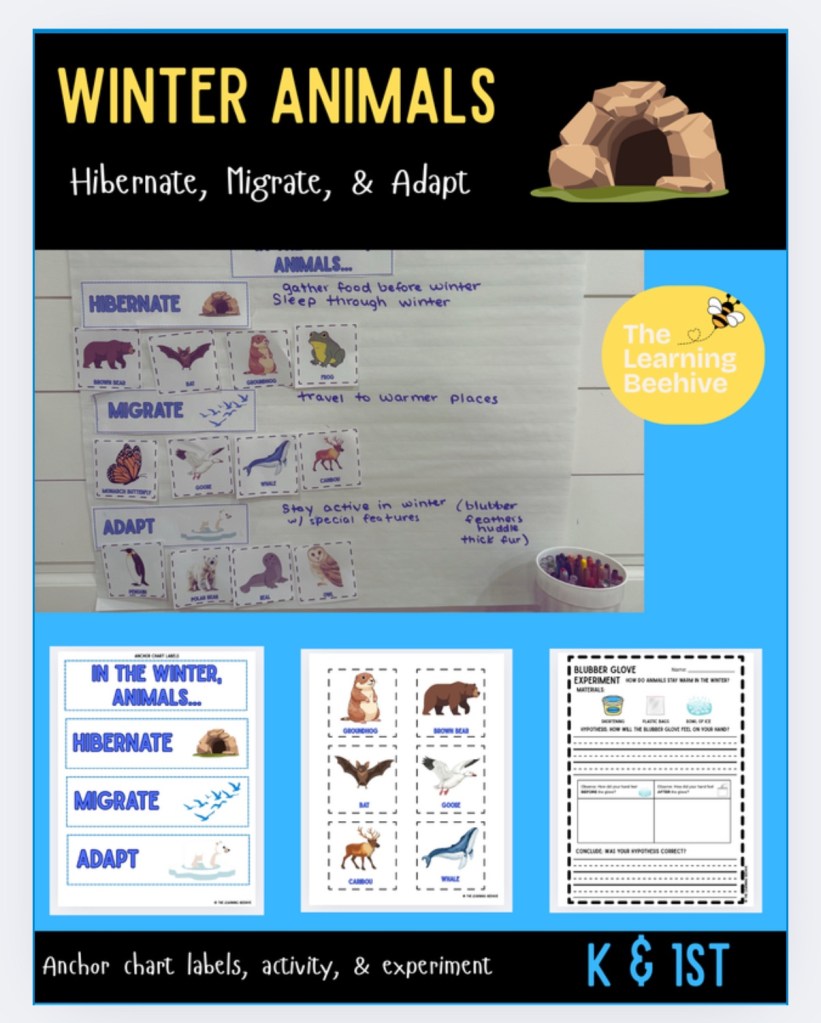
In the Winter, Animals… Hibernate Migrate Adapt
Using the pre-made anchor chart labels from the pack makes this fast and clean, while still allowing students to help generate the ideas. As students share, we add simple notes like:
Sleep through winter Travel to warmer places Stay active with special features
This becomes a visual reference students use all week.
🐾 Activity: Animal Sort
To check understanding, students complete an animal sorting activity.
They sort animals into:
Hibernate Migrate Adapt
This activity reinforces vocabulary, builds reasoning skills, and gives students a chance to explain why an animal belongs in each category.
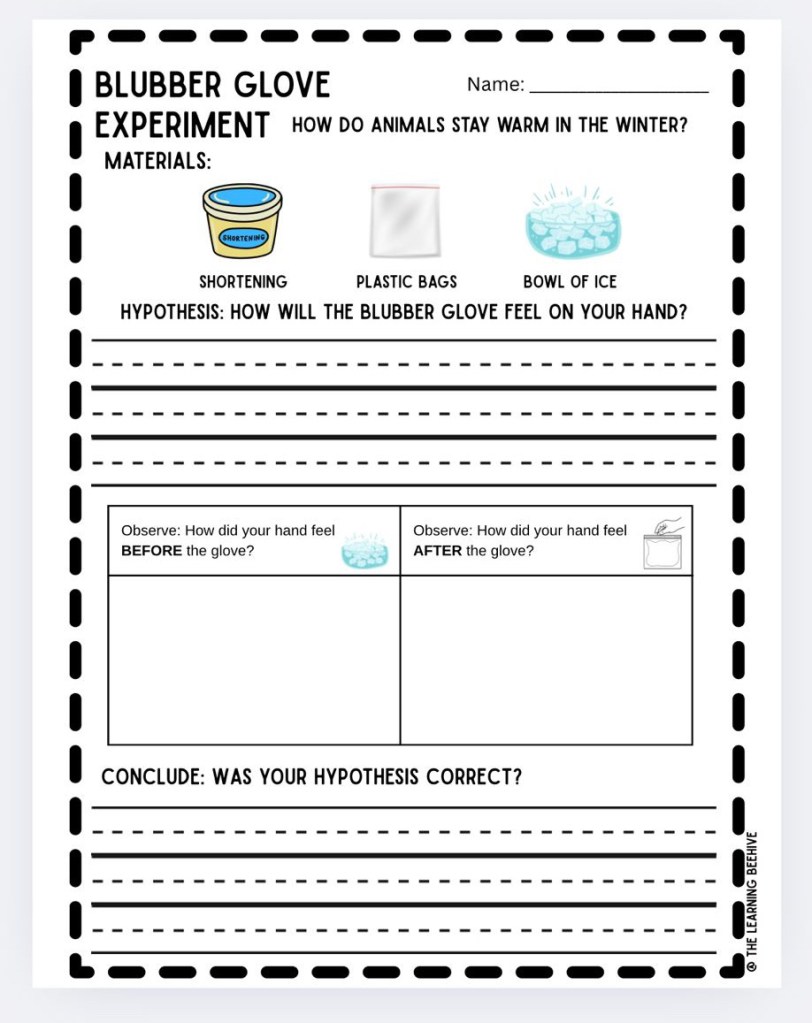
🧪 Hands-On Science: The Blubber Glove Experiment
To explore adaptations, students complete the Blubber Glove Experiment.
Students:
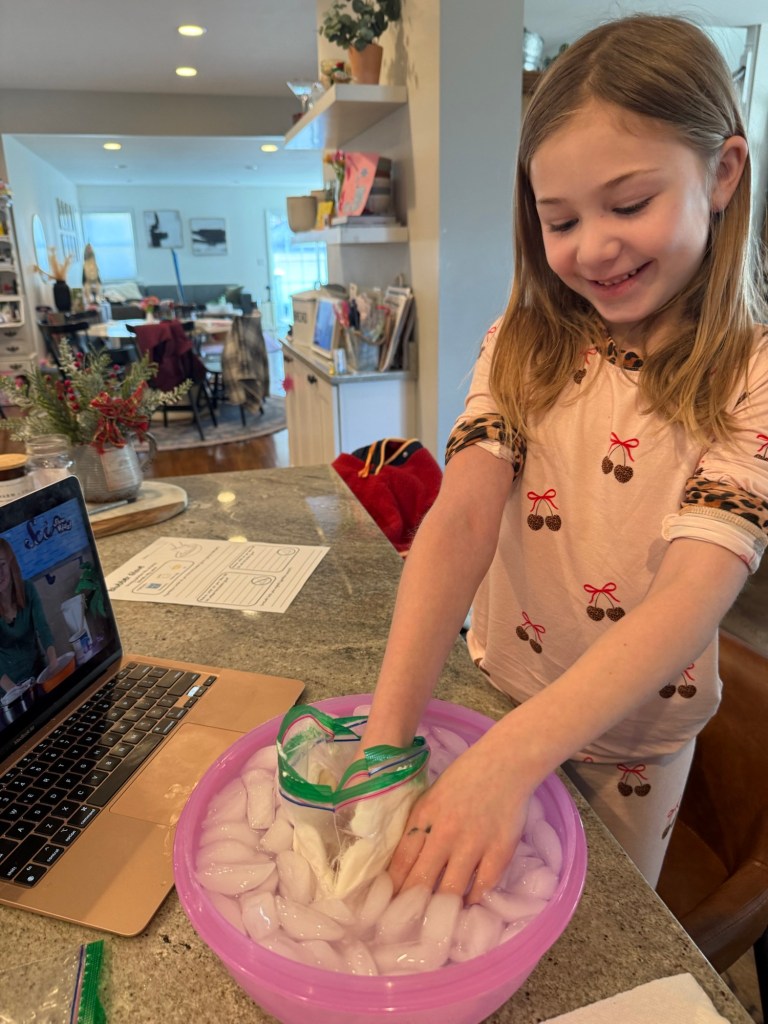
Make a prediction (hypothesis) about how the blubber glove will feel Place a bare hand briefly in ice water Test again using the blubber glove Observe and compare how their hand felt before and after
We connect this experience to real animals like seals, whales, and polar bears, discussing how blubber helps them stay warm in cold environments.
This experiment is always a favorite—and it makes the idea of adaptation very real for young learners.
🐝 Everything You Need, Ready to Go
All of the materials shown here—including:
Anchor chart labels Animal picture cards Sorting activities Blubber glove experiment guide Student recording sheet
are included in one Winter Animal Adaptations pack, available in my Teachers Pay Teachers shop.
✨ Perfect for:
Winter science units Arctic animal studies Nonfiction reading connections Hands-on STEM learning
Check out Winter Animal Adaptations on TPT
 Hi, I’m Christine, the heart behind The Learning Beehive.<br>I’m a certified teacher with 10 years of classroom experience, teaching 1st–3rd grade and special education. Over the years, I’ve seen how powerful hands-on, meaningful learning can be, especially for children who learn differently or need extra support.<br>During the winter months, I’m home learning alongside my two children, Beckett and Mila. My son has a rare disease, which means we’re especially mindful during cold and flu season. Being home during this time has deepened my passion for creating low-prep, flexible learning activities that work in classrooms, homeschool settings, and small groups alike.<br>The Learning Beehive was created to share play-based literacy and math resources, sensory activities, and seasonal learning ideas that support early learners with care and intention. Everything here is designed to be approachable, engaging, and adaptable—because every child deserves to feel confident and capable.<br>Whether you’re a classroom teacher, homeschool parent, or support little learners in a different way, I’m so glad you’re here.<br>Welcome to the hive 💛